Biographies

A family of performers, composers, and teachers

The Neaga story begins in a lăutar household, expands through conservatories and concert institutions in Chișinău, Bucharest, Paris, Moscow, and Kokand, and continues through later generations of violinists and pianists.

These biographies reconcile five books with family-provided records. When the books disagree, the difference is stated rather than silently resolved.

Before the conservatory

Musical roots and the immediate household

Anton Neaga

The earliest named musician in the lineage is described as a cobza player. The books do not supply a full life chronology, but his place in the family establishes the lăutar inheritance into which later generations were born.

National Library of Moldova, Gheorghe Neaga: Biobibliografie (2001), p. 10; Chiciuc, p. 194.

Timotei / Timofei Neaga

Ștefan's father was a violinist and leader of a lăutar ensemble. He began teaching Ștefan violin and piano around 1908; by 1912, the boy was already playing in the family ensemble.

Sofronov 1959, pp. 4–6; Gordiychuk 1976, p. 11.

Maria Neaga

Gheorghe's mother is explicitly described as a distinguished pianist. Her role makes the immediate home a two-sided musical household, not only a paternal line.

Gheorghe Neaga: Biobibliografie (2001), p. 10.

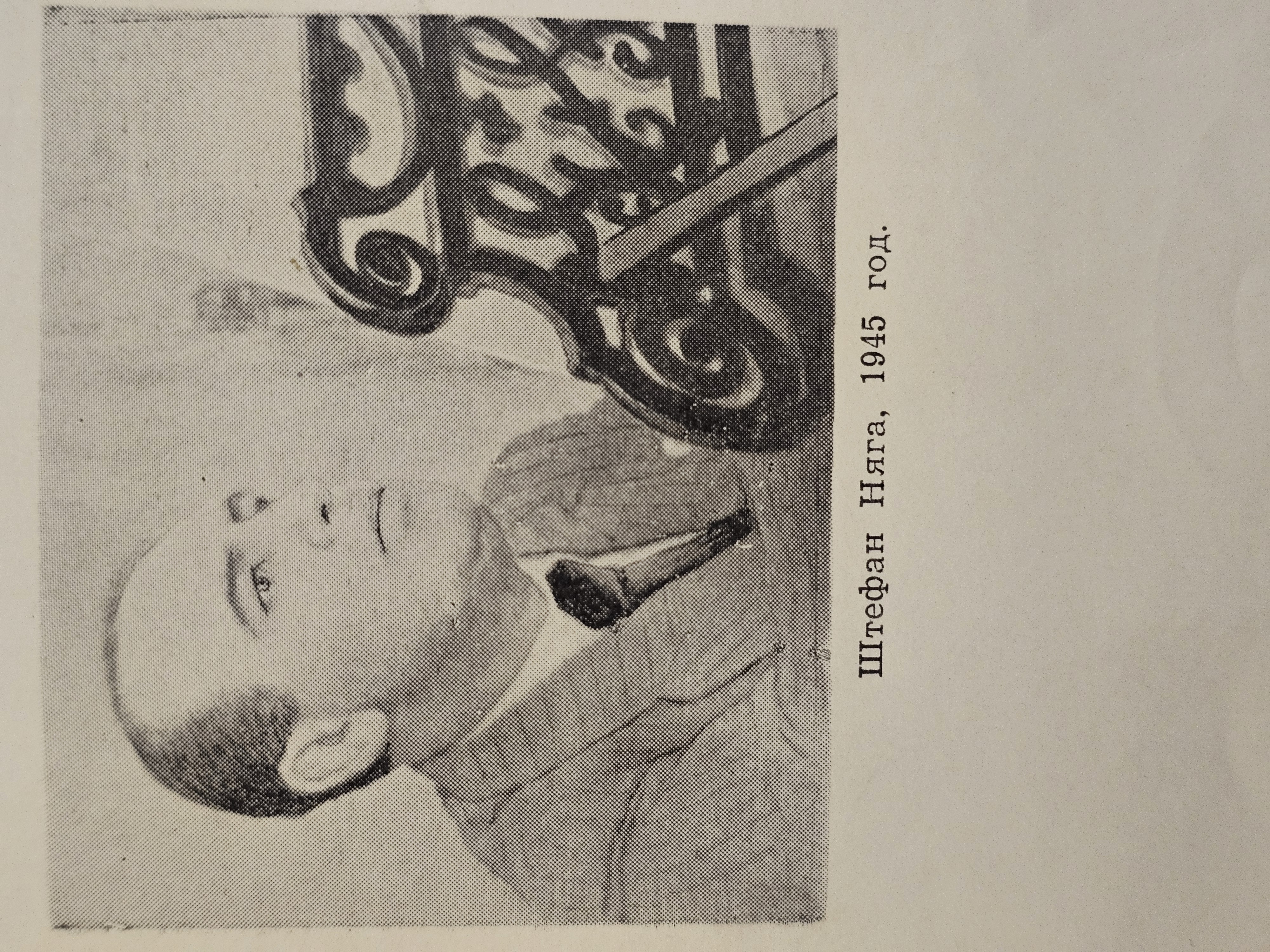
Printed 1945 portrait of Ștefan Neaga

Pianist · composer · conductor · pedagogue · folklore researcher

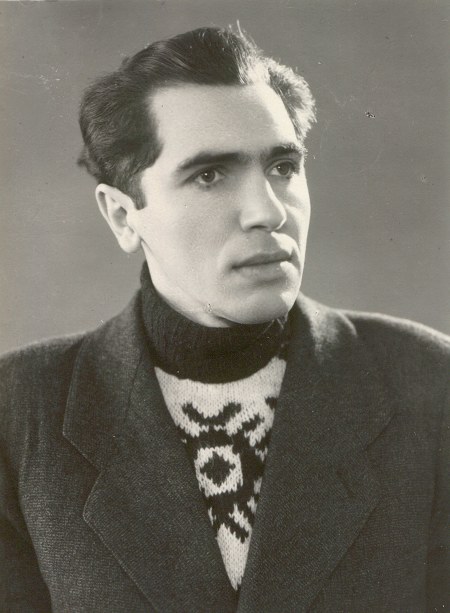
Ștefan Neaga

24 November O.S. / 7 December N.S. 1900, Chișinău30 May 1951

Ștefan Neaga joined inherited lăutar practice to formal study and became a central composer-performer and organizer of Moldovan professional musical life. The supplied books do not state his place of death, so this archive does not infer it.

1900–1920

Chișinău and the family ensemble

He learned violin and piano from his father, performed in the family ensemble, entered an intermediate piano course, and completed the Chișinău music school with distinction in 1918. His early professional world joined oral tradition, dance repertory, and classical training.

Sofronov 1959, pp. 4–10; Gordiychuk 1976, p. 11.

1920–1936

Bucharest: performer and composer

After moving to Bucharest in 1920, he played in Grigoraș Dinicu's orchestra and studied piano and composition at the Royal Academy. His surviving chronology includes the Sinfonietta (1922), two symphonies (1924 and 1926), The Blind Musician, a Violin Sonata in B minor, a Piano Sonata in C minor, String Quartet in D minor, Day of Wrath, and symphonic sketches. Several prewar scores were later lost or unlocated.

Sofronov 1959, pp. 11–21 and catalog pp. 78–79; Gordiychuk 1976, pp. 12, 33–34.

1937–1940

Paris and return

He traveled to Paris with Dinicu's ensemble, received recognition at the 1937 exposition, and enrolled for advanced piano, conducting, and composition study. The documents name Alfred Cortot, Charles Munch, and a teacher whose name appears in variant forms as Mangeot/Manjo. Evidence supports study through March 1940, but not a completed degree.

Sofronov 1959, pp. 22–24; Sinyaver 1949, pp. 22–23; Gordiychuk 1976, p. 12.

1940–1944

Conservatory, evacuation, and wartime work

Returning to Chișinău in June 1940, he became a conservatory deputy director and teacher. During evacuation he taught in Saratov and worked in Moscow; accounts of the complete route differ. Major works include Moldavia, Poem about the Dniester, a Violin Concerto, two distinct Doina works, dances, songs, and arrangements.

Sofronov 1959, pp. 32–48; Gordiychuk 1976, pp. 12–13; Sinyaver 1949, pp. 24–25.

1944–1951

Composition and institution building

After returning to Chișinău, Ștefan taught, conducted Philharmonic concerts, led folklore publication work, served on juries, held elected office, and became chairman of the composers' union in 1946. His late output includes the 1945 state anthem, the cantata Ștefan cel Mare, theatre music for The Magic Mace, Bessarabians, a 1949 Jubilee Cantata, and the 1950–1951 oratorio Song of Rebirth.

Sinyaver 1949, pp. 22–26, 39, 48–50; Sofronov 1959, pp. 49–77; Gordiychuk 1976, pp. 14, 28–34.

Roles and recognition

A career larger than a work list

Sources identify him as pianist, composer, conductor, conservatory teacher and administrator, folklore researcher, composers' union leader, Supreme Soviet deputy, Honored Art Worker, Order of Lenin recipient, and State Prize laureate. Soviet-era political assessments are treated as historical source context, not as the archive's own judgment.

Sinyaver 1949, pp. 22–26 and 49; Gordiychuk 1976, pp. 11–14.
Representative works across genres

  • Orchestral: two symphonies, Sinfonietta, The Blind Musician, symphonic sketches, Moldavia, Poem about the Dniester.
  • Concert and chamber: Violin Concerto in D major, Violin Sonata in B minor, String Quartet in D minor, piano quartet-or-quintet in B-flat (forces disputed).
  • Keyboard: Piano Sonata in C minor, French Suite, nocturnes, dances, preludes, and a paraphrase.
  • Vocal and dramatic: Day of Wrath, Ștefan cel Mare, Bessarabians, Jubilee Cantata, Song of Rebirth, songs, choral arrangements, and theatre music.

See Ștefan's complete sourced catalog

Portrait of Gheorghe Neaga

Violinist · composer · pedagogue · artistic director

Gheorghe Neaga

19 March 1922, BucharestDied 24 November 2003, Dallas

Gheorghe Neaga's career joined professional violin performance with an increasingly broad compositional language. The new 2001 National Library biobibliography makes clear that chamber music was only one part of an output spanning symphony, concerto, opera, oratorio, film, voice, piano, and teaching repertory.

1922–1942

Bucharest, Chișinău, Kokand

Born in Bucharest to Ștefan and pianist Maria Neaga, Gheorghe began piano around age six before moving to violin and viola. He entered Constantin Nottara's violin class at the Royal Academy in 1937. After the family's 1940 return to Chișinău, war brought him to Kokand in 1941, where he played with the evacuated Doina ensemble.

Gheorghe Neaga: Biobibliografie (2001), pp. 10–11; Chiciuc, pp. 194–197.

1942–1952

Moscow violin formation

At the Moscow Conservatory he studied violin with Konstantin Mostras and Boris Kuznețov, with theory work under Alexander Goedicke and Sergei Skrebkov, while gaining practical experience in theatre orchestras. He graduated in 1948 as violin soloist and pedagogue, returned briefly to teach in Chișinău, then completed postgraduate violin study with Lev Tseitlin.

Gheorghe Neaga: Biobibliografie (2001), pp. 10–11; Sinyaver 1949, pp. 48–49.

1952–1964

Performer-teacher becoming composer

Back in Chișinău, he played in the State Philharmonic orchestra, taught violin, joined the composers' union in 1957, and completed a composition diploma in 1958. Early works include violin-and-piano dances, piano variations, Sonata No. 1, songs, piano pieces, and Symphony No. 1.

Gheorghe Neaga: Biobibliografie (2001), pp. 11–12; Chiciuc, pp. 199, 204–205.

1965–1979

Symphony, concerto, opera, and oratorio

This expansive period brought Symphony No. 2, the poem Danco, orchestral suites, Aurora, the opera Glira / Barbu Lăutaru, two violin concertos, quartets, a chamber-orchestra concerto, film scores, piano works, songs, and choruses. He also led the Radio Symphony and served in composers' union leadership; exact role titles and dates conflict across sources.

Gheorghe Neaga: Biobibliografie (2001), pp. 11–13 and catalog pp. 14–29.

1980–1997

Mature synthesis and music theatre

Later works include the 13-part chamber symphony Perpetuum mobile, Symphony No. 3, the heroic opera The Golden Horn, vocal music on Mihai Eminescu, Sonata No. 2, Inima, the mono-opera The Phoenix Bird, and Nefertiti. He remained active as teacher, editor, and participant in new-music festivals.

Gheorghe Neaga: Biobibliografie (2001), pp. 12–13; Teleradio catalog items 113–132.

1999–2003

Dallas manuscripts

Gheorghe relocated to Dallas in 1999 and continued composing. Chiciuc documents late manuscripts including a 2001 trio and a 2003 string quartet. He died in Dallas on 24 November 2003.

Chiciuc, pp. 141, 192, 199, 205–206; family working timeline.

Representative works across genres

  • Symphonic: three numbered symphonies, Danco, Perpetuum mobile, orchestral suites and concert works.
  • Concertante: two violin concertos, works for violin and orchestra, and concertos for chamber/string orchestra.
  • Stage and screen: Glira / Barbu Lăutaru, The Golden Horn, The Phoenix Bird, Nefertiti, and film scores.
  • Vocal-symphonic: Aurora, choruses, romances, and vocal cycles on texts by Gheorghe Dimitriu, Mihai Eminescu, and others.
  • Chamber and solo: string quartets, sonatas, trios, suites, violin works, piano cycles, études, inventions, and late manuscripts.

See Gheorghe's complete sourced catalog

Continuing generations

Performance and teaching remained a family practice

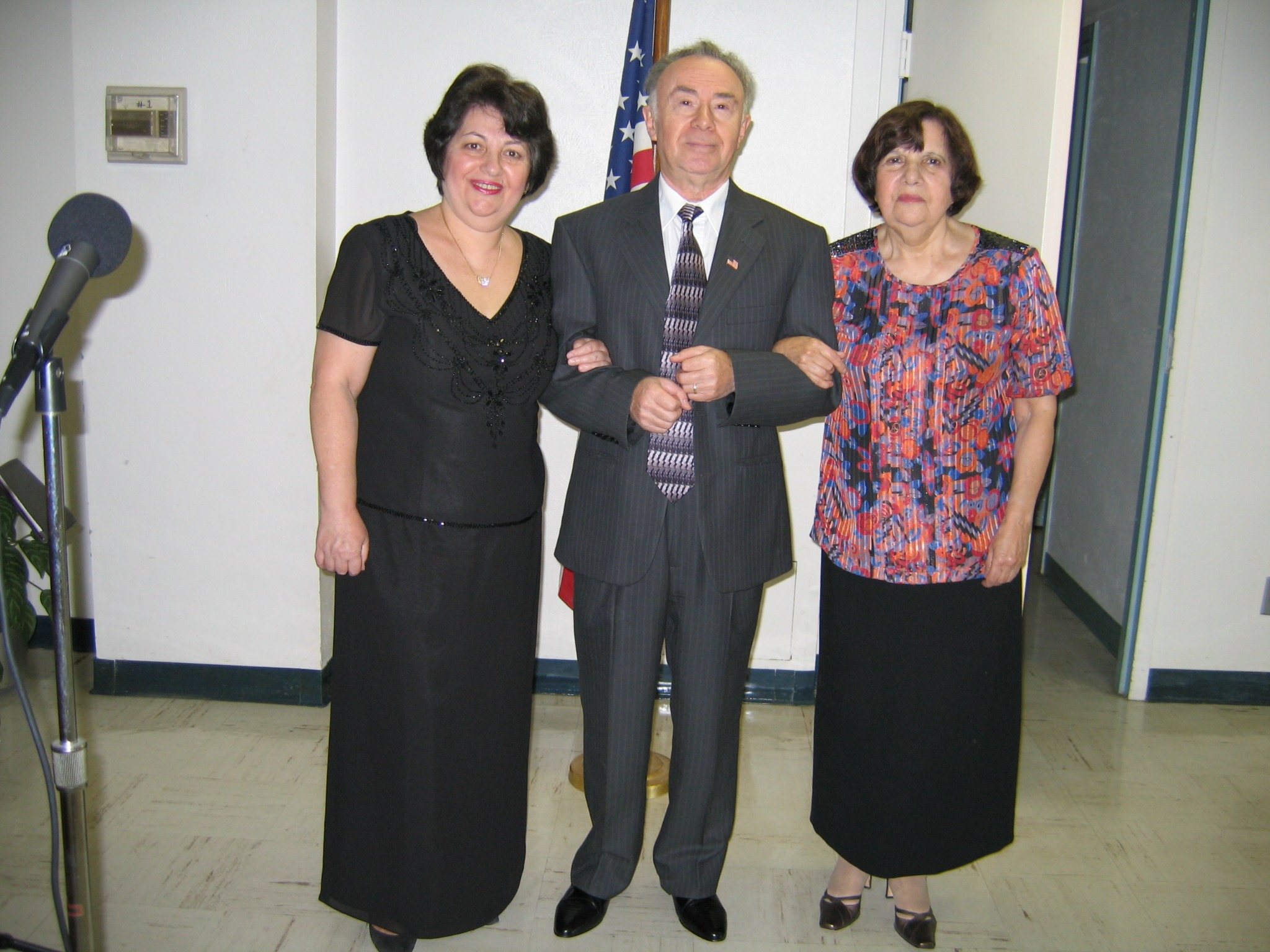
Angela Neaga, Yuri Khayt, and Lily Neaga in a family photograph

Lily Neaga

Family records describe Lily (1924–2016), Gheorghe's wife, as a Romanian-born violinist trained in Bucharest and Moscow who performed with orchestras in Moldova and later lived in Texas. She and Gheorghe raised daughters Angela and Lucia within the same musical tradition.

Family archive biography; relationship not supplied by the four new books.

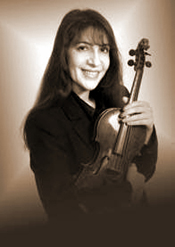
Portrait of violinist Lucia Neaga

Lucia Neaga

Family records identify Lucia as a violinist and pedagogue with conservatory training and international touring experience. Book 4 independently documents her performing Gheorghe's music, including the first performance and 1992 recording of Sonata No. 2 with Angela Neaga.

Gheorghe Neaga: Biobibliografie (2001), chronology p. 13 and Teleradio items 116, 121, 125; family archive biography.

Angela Neaga and the next generation

Book 4 documents pianist Angela Neaga in recordings and performances of Gheorghe's Duet, chamber symphony Perpetuum mobile, Five Love Romances, Sonata No. 2, and the Credința cycle. The family archive also preserves the continuing violin tradition through Dmitriy.

Gheorghe Neaga: Biobibliografie (2001), Teleradio items 116, 121, 123, 125, 127–132; family archive.